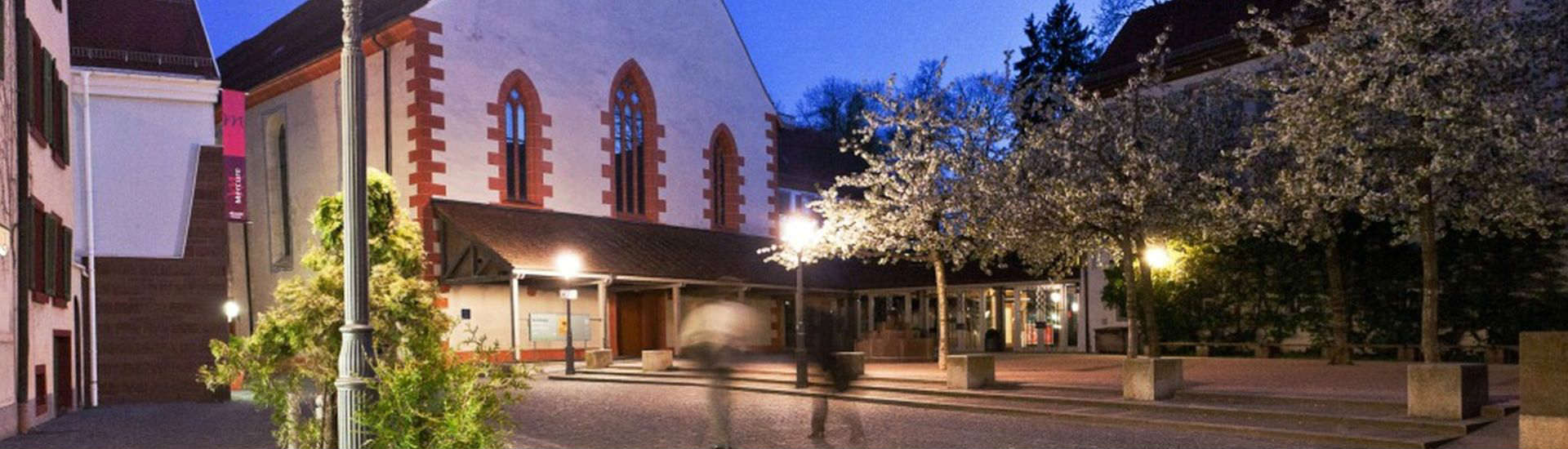
2018 is all about the Celts: Two special exhibitions in Villingen-Schwenningen are dedicated to the fascinating culture of the Iron Age. The combined tours begin with a visit to the exhibition “Celts, Kalats, Tigurini,” before participants head to the Riettor square to learn more about “The Secret of the Celtic Princess.” With the ticket, you can then explore both exhibitions on your own afterward. Participation fee: 5 euros (reduced rate: 3 euros). Dates: July 8 and July 15, both at 3:00 p.m. Meeting point: Foyer of the Franziskanermuseum
More information about the special exhibition
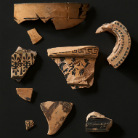
The Celts are first mentioned in the writings of Greek historians around 500 B.C. The people of this period are referred to as the “early Celts.” Starting around 600 B.C., fortified central settlements emerged in southwestern Germany, eastern France, and Switzerland, in the vicinity of which the social elite had themselves buried in magnificent burial mounds. This phenomenon shaped early Celtic Central Europe for a period of nearly 200 years. The early Celtic elite was part of a European network in which goods were exchanged over thousands of kilometers. As early as the 7th century BCE, goods—primarily from the southern and southeastern Alpine regions—were transported northward across the Alpine passes and valleys as status symbols. In his lecture, Thomas Hoppe sheds light on these diverse and close ties with the Mediterranean world of the Etruscans and Greeks and incorporates finds from the Magdalenenberg near Villingen into this network of relationships.
Thomas Hoppe heads the Pre-Roman Metal Ages Department at the Württemberg State Museum and served as the scientific project director for the major state exhibition “The World of the Celts.” The lecture is being held in cooperation with the Friends of the Municipal Museums in Villingen-Schwenningen.
Admission is free.
The largest burial mound meets the largest fortified settlement of the Central European Iron Age: Drawing on two significant archaeological sites, the exhibition explores the enigmatic culture of the Celts. The focus is on the Heidengraben near Bad Urach, a Late Celtic “oppidum” whose imposing defensive structures still rise from the landscape today. Public tours will take place on July 1 and on the final day of the special exhibition, July 22, during which life in the Iron Age will be explained using the most important artifacts.
More information about the special exhibition
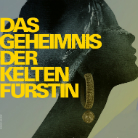
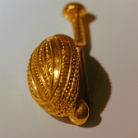
A story straight out of a mystery novel: A student finds an object in a field that he mistakes for a bottle cap. It turns out to be part of a treasure that was placed in the grave of a Celtic princess 2,600 years ago. The exhibition at the Riettor features high-quality replicas of the finds—unique gold jewelry, artfully crafted amber objects, and extraordinary bronze works. A newly published companion volume from Theiss-Verlag is available for purchase in the Franziskanermuseum’s gift shop.
Exhibition location: “Am Riettor” Square
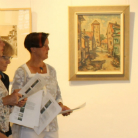
The themed exhibition “Artists’ Views of Villingen” features a wide range of artists and provides an overview spanning more than 150 years. On display are cityscapes by the ambitious artists Ludwig Engler, Waldemar Flaig, Richard Ackermann, and Paul Hirt. The exhibition also includes earlier artists such as Dominikus Ackermann the Younger, as well as teachers like Albert Säger and Guido Schreiber. For individual visitors, the exhibition remains open during the summer months through September 2, 2018, on Saturdays and Sundays.
More information about the special exhibition
In the blog STADT HOCH ZWEI, Peter Graßmann focuses this time on the era of the Prince of Magdalenenberg. His burial chamber was dated precisely to 616 BCE; the Princess of Heuneburg was buried only a short time later. But what kind of world did these two live in? What was happening across the Atlantic? Were the pyramids already there? And what were the Romans actually up to?
https://www.stadthochzwei.de/2018/06/25/the-world-around-616-b-c-what-happened-during-the-time-of-the-prince-of-magdalenenberg/
The answers to these questions and other fascinating articles can be found at www.stadthochzwei.de
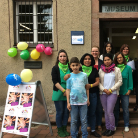
The Intercultural Parent Mentors from the Schwarzwald-Baar District will once again be guests at this year’s Culture Night at the Local History and Clock Museum, inviting children, teens, and curious adults to shift their perspective as they explore both their own culture and a foreign one.
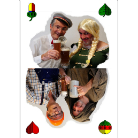
As part of the 13th Schwenningen Culture Night, Daniel Knobelspiess and Wolfgang Mader will present humorous songs, skits, poems, legends, and a quiz all centered on the theme of beer. Originally brewed together to mark the anniversary of the German Purity Law, this year’s program is enriched with local ingredients. Texts by Gerhard Polt, Heinz Erhard, Karl Valentin, and others provide the necessary original gravity. Handcrafted music on guitar, mandolin, and bandoneon promises to make the whole experience well-rounded and smooth.
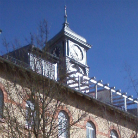
Whether searching for animals in the museum, discovering the unique features that distinguish a factory from ordinary houses, or playing a special memory game, visitors learn in a fun way all about clocks, time, industry, and the museum in Schwenningen. An added highlight is the “living cuckoo clock,” which helps visitors of all ages not only tell the time but also understand and appreciate the design of this classic Black Forest timepiece.
The Friends Association is offering special guided tours in July for anyone interested. Members, as well as all other culture enthusiasts, are cordially invited.
In a combined tour on Tuesday, July 3, at 5:00 p.m., Dr. Anita Auer will present the highlights of the two exhibitions “The Secret of the Celtic Princess — The Magnificent Tomb at Heuneburg’ and ‘Celts of Kalats, Tigurini—Archaeology at Heidengraben.’ The tour begins at the ‘Celtic Princess’ exhibit on Am Riettor Square.
From the Heinzmann Collection, works by Richard and Dominikus Ackermann, Ludwig Engler, Paul Hirt, and Albert Säger, among others, will be on display at the Old Town Hall under the title “Artists’ Views of Villingen.” Dr. Michael Hütt will lead a tour of the exhibition on Tuesday, July 24, at 6 p.m. The meeting point is at the Old Town Hall in the Villingen district.
Regarding the Friends’ Association’s activities: <link info-service freundeskreis.html>www.franziskanermuseum.de/info-service/freundeskreis.html