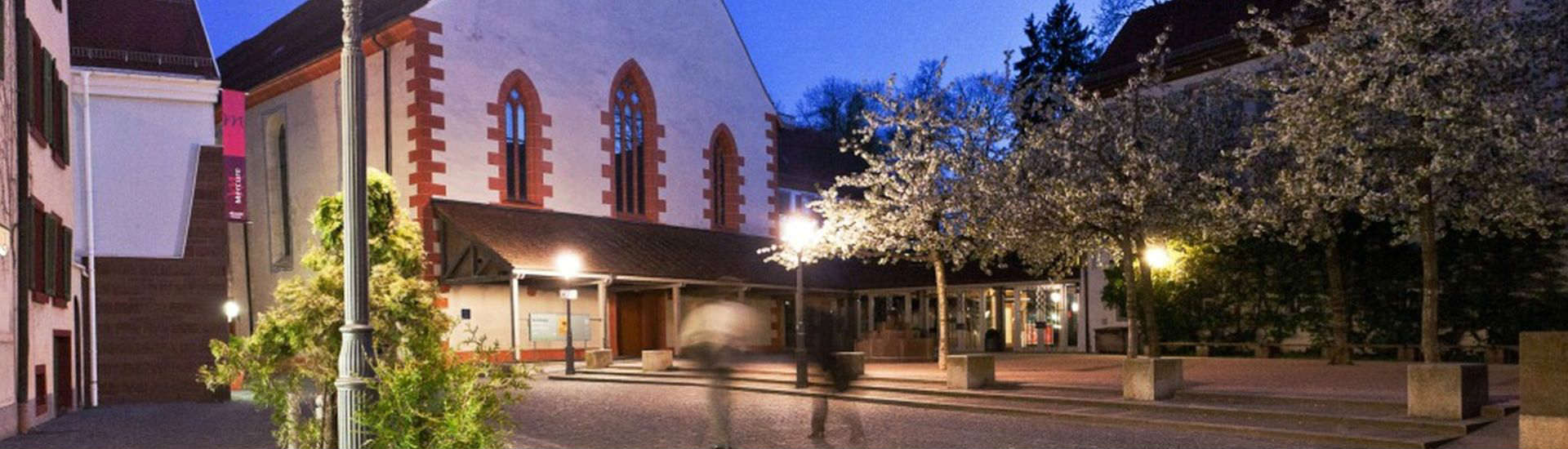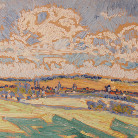
Over 70 colorful paintings and prints by the four renowned modernist painters from Villingen—Richard Ackermann, Paul Hirt, Waldemar Flaig, and Ludwig Engler—depict views of nature in the Black Forest, Baar, the Swabian Alb, and Lake Constance.
> More about the exhibition
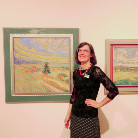
Under the guidance of an expert tour guide, participants in the public tours—wearing face masks and maintaining a safe distance—will enjoy views of the local landscape: Baar, the Black Forest, the Swabian Alb, and Lake Constance.
Sunday, September 6, 3:00 p.m., with Dr. Anita Auer
Tuesday, September 15, 2:00 p.m., with Ina Sahl. After the tour, visitors are welcome to stop by the museum café.
Sunday, September 20, 3:00 p.m., with Ina Sahl

This year, Open Monument Day will take place online. The Franciscan Museum is participating with a film about the Schwedendamm, a unique cultural monument from the Thirty Years’ War. In 1634, this bulwark was built at the narrows between Warenberg and Ölmühle to dam up the Brigach River and flood the city. All contributions will be published on September 13 on the city’s website.
> City of Villingen-Schwenningen
website> More about Open Monument Day
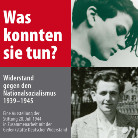
This traveling exhibition, organized in cooperation with Pro Stolpersteine Villingen-Schwenningen e.V., the July 20, 1944 Foundation, and the German Resistance Memorial Center uses 25 panels to tell the stories of those who had the courage to resist the Nazi dictatorship. Among them are residents of Villingen and Schwenningen such as Ewald Huth and Karl Schäfer.
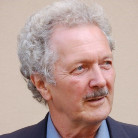
What could have been done against the Nazi state? Was resistance even possible? Historian Professor Wolfram Wette highlights the scope for action. The spectrum of resistance against National Socialism ranged from planned regicide to the active decency of many “ordinary people” who tried to save those being persecuted. Free admission!
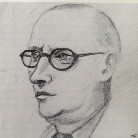
A member of the Pro Stolpersteine association will guide you through the special exhibition on resistance during the Nazi era, focusing in particular on the stories of residents of Villingen and Schwenningen who were involved. Free admission!
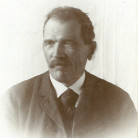
To acquire his items, Black Forest collector Oskar Spiegelhalder relied on a network of agents who either supplied him with items at low prices or searched for them specifically. One such “agent” was the Rötenbach watchmaker Pius Wehrle, whose eventful life is recounted by Joachim Morat in his post.
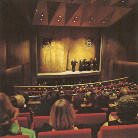
In 1935, cinema operator Robert König from Lörrach approached the city of Villingen with a plan to build a new movie theater. This gave rise to a cultural institution that seems to have anticipated today’s cross-media landscape. Dr. Anita Auer sets out to trace the origins of today’s Theater am Ring, which is celebrating its 80th anniversary this year.