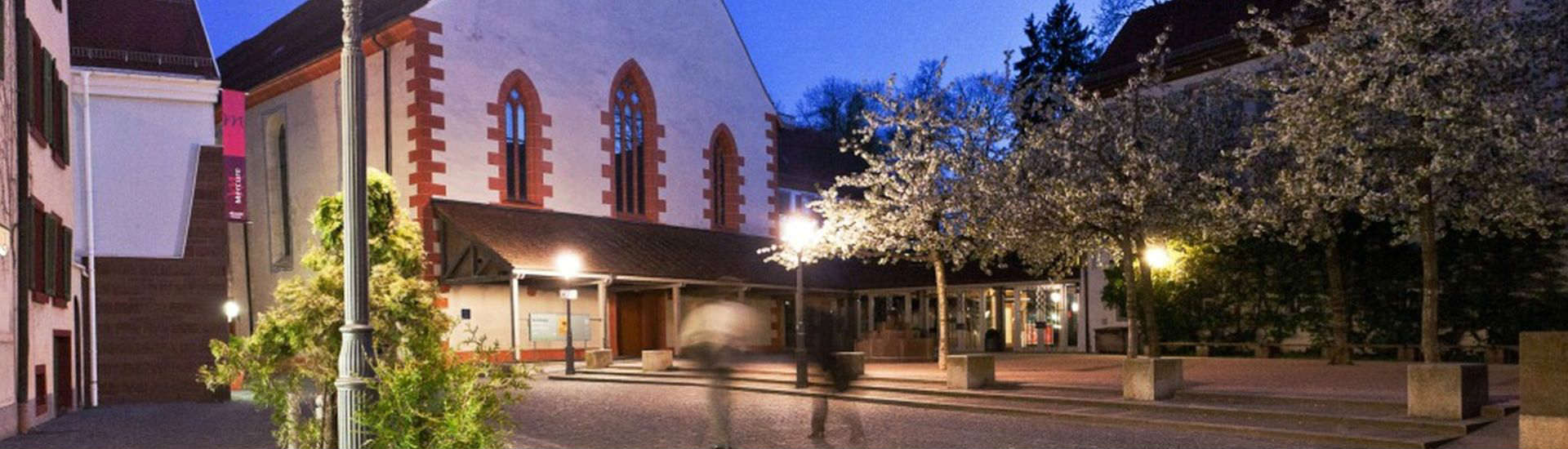
To celebrate Unicorn Day, the Franciscan Museum is offering a family tour. Children ages 6 and up and adults can learn more about the unicorn and other mythical and legendary creatures during this tour. In a playful way, Natalie Leva explains the characteristics of these fairy-tale figures and their role in helping children overcome their fears.
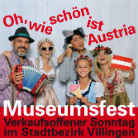
2018 marks the start of a series of museum festivals focusing on different countries. The series kicks off with the Alpine republic of Austria. For nearly 500 years, Villingen was part of the Habsburg Empire. Austrian culture, lifestyle, and delicacies continue to enjoy great popularity. For the museum festival, the café at the Franziskaner will be transformed into a Viennese coffeehouse—in addition to Austrian specialties such as Sachertorte and Mozartkugeln, “I Solisti di Salon” from the Villingen-Schwenningen Music Academy will provide the perfect musical accompaniment. The fashion show featuring the historical modeling agency “Sissi’s Heirs,” the photo booth, and a waltz dance class are just a few of the other attractions—all with free admission.
Vanessa Charlotte Heitland has been the director of the Städtische Galerie Villingen-Schwenningen since June 1, 2018. Since her studies in art history and classical archaeology, the new gallery director has been deeply passionate about communicating art and its contexts. She aims to put this central commitment into practice in her work in Villingen-Schwenningen as well. The fact that her focus doesn’t always have to be on contemporary art—and that she also enjoys exploring the past—can be experienced during the “Spotlight Tour” at the Franziskanermuseum. There, she will present her favorite object from the collection.
In cooperation with the Friends of the Municipal Museums in Villingen-Schwenningen e.V.; admission is free.
by PD Dr. Armand Baeriswyl, Bern
The Zähringers were regarded not only as the great pioneers in the founding of medieval towns, but also as true urban planners with specific urban design concepts that they implemented in the towns they founded. Furthermore, traditional urban historical research has sought to identify such city-founding plans among other noble families as well. But what is the reality behind the myth of the Zähringer Cross and the standard plot? Archaeological findings from cities such as Bern, Freiburg im Breisgau, and Burgdorf show that we must move beyond the myth of the “Zähringer city” as a city planned by the Dukes of Zähringen.
Armand Baeriswyl is a research associate at the Archaeological Service of the Canton of Bern and president of the Swiss Working Group for Medieval and Modern Archaeology.
The event is organized by the Baar Association for History and Natural History (Verein für Geschichte und Naturgeschichte der Baar e.V.) and the Franciscan Museum.
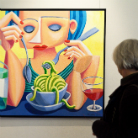
The 65th Annual Exhibition of the Kunstverein Villingen-Schwenningen e.V. will open on Sunday, November 4, at 12:00 p.m., with a welcome address by Chairman Dr. Helmut Kury and a musical dialogue.
This year, 48 members and guests of the association are represented, presenting their works in pairs. Artist talks will take place on Sundays, November 11 and November 18, at 3 p.m. each day.
Closing event with a musical performance: Sunday, November 25, 3 p.m.
now it’s shining again—just look at it!” writes Ina Sahl on the blog STADT HOCH 2. The new post focuses on the challenging restoration of a Black Forest flute clock with a lacquered sign, which can now be seen and heard in the Black Forest Collection.
https://www.stadthochzwei.de/2018/10/09/hidden-in-the-storage-room-was-a-flute-clock-now-it-shines-again-just-look/
More blog posts can be found at www.stadthochzwei.de
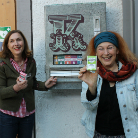
A cigarette vending machine converted into an art vending machine can now be found in the foyer of the Franziskanermuseum. For 4 euros, you can pull out little art surprises—as a gift, souvenir, or collectible. The vending machine features works by regional and national artists who are supporting the project with small, original artworks. The idea for the vending machines originated in Berlin. The first art vending machines in Baden-Württemberg are located in Villingen-Schwenningen and Königsfeld. The idea to set up an art vending machine in the foyer of the Franziskanermuseum came from the artist Panka Chirer-Geyer.

During this guided tour led by Beate Bea, the city’s commissioner for people with disabilities, visitors will meet individuals who rely on medical devices due to physical limitations. Large-format photographic portraits by Shari Lindenberger complement the quotes and create a visual language of their own.
Exhibition dates: through Sunday, November 18, 2018