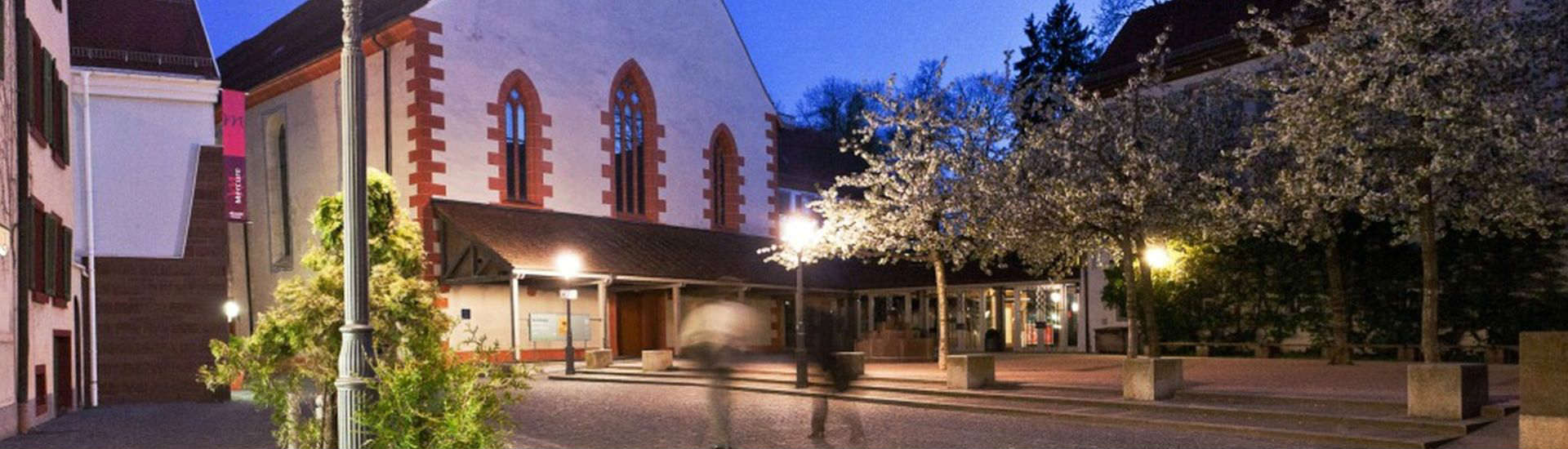
Starting now, we invite you to join us in our exhibition spaces for an exciting journey through the KULT(UR)WALD. Based on the latest research findings, discover that the cultural history of the Black Forest is much older than is often expected. The exhibition trailer offers a first glimpse:
> Watch the KULT(UR)WALD trailer
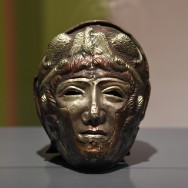
Was the Black Forest an impenetrable and uninhabited primeval forest before the monasteries were founded? Or does its history stretch back much further than previously thought? During the public guided tours, the highlights of the special exhibition are placed in the context of the settlement history of this low mountain range.
Tickets for the tours, which take place every other Sunday, are available at the museum ticket office and through online advance sales.
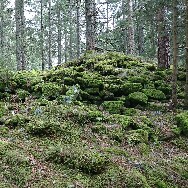
Mysterious landforms and apparent remains of structures deep in the Black Forest fascinate both laypeople and researchers alike. In his lecture titled “Mysterious Traces in the Forest. What’s the Real Story Behind Krumpenschloss and the Stone Mounds Near Titisee?” Professor Thomas Knopf from the University of Tübingen will address two particularly persistent myths about the early Black Forest, separating fact from fiction.
Thomas Knopf is a professor at the Institute for Prehistory, Early History, and Medieval Archaeology at the University of Tübingen and director of the Celtic Museum in Hochdorf. He is also an expert on the early Celtic archaeological site at Magdalenenberg, where he led a research excavation around 2010.
Admission is free.
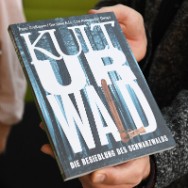
For the special exhibition “KULT(UR)WALD: The Settlement of the Black Forest,” Peter Graßmann, Dorothee Ade, and Lisa Rademacher, together with other co-authors, have compiled the current state of knowledge on the early settlement and development of the low mountain range—prior to the founding of the monasteries—and published it in a companion book. The richly illustrated book is available at the museum shop and local bookstores for 12 euros.

SABA is the focus of an interesting storytelling café, where the former radio factory is explored from various perspectives. Production at the Schwarzwälder Apparate Bau Anstalt in Villingen began in 1919; soon after, the first headphones were manufactured, and in 1923, SABA was registered as a trademark. Former employees, such as Willy Grieshaber, have plenty to share, as does high school senior Simon Haas, who has studied the history of SABA in depth. And for Villingen-based cabaret artist Thomas Moser, SABA is practically in his blood.
The storytelling café will be moderated by Friedhelm Schulz.
Admission is free.
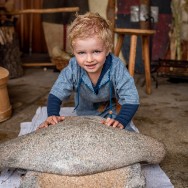
Once again, the Celts are coming to life in the courtyard of the Franziskaner Museum. On Sunday, July 24, several Celtic groups will set up camp in the courtyard. On display will be the equipment and weapons of Celtic warriors, as well as traditional clothing and jewelry from over 2,000 years ago.
The event is organized in cooperation with the Friends of the Municipal Museums in Villingen-Schwenningen.