This year, we’re surprising our museum friends with a digital Advent calendar. Starting December 1, we’ll open a door every day on our Facebook and Instagram pages. There, you’ll learn interesting facts about the museum and our museum treasures. Perhaps this will inspire you to stop by in person and look for the object described?
We look forward to both digital and in-person visits!
The Franziskanermuseum remains open Tuesday through Saturday from 1:00 p.m. to 5:00 p.m. and on Sundays and holidays from 11:00 a.m. to 5:00 p.m. The museum is closed only on Christmas Eve, Christmas Day, New Year’s Eve, and New Year’s Day.
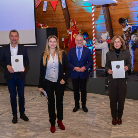
For the major Carnival exhibition “Family Secrets. De Narro un si ganz Bagasch,' presented in 2020 in collaboration with the Villingen Historical Carnival Guild, the Franciscan Museum and the Villingen Carnival Guild were awarded the special prize by the Association of Swabian-Alemannic Carnival Guilds. During the award ceremony at the Narrenschopf in Bad Dürrheim, museum director Dr. Anita Auer and guild master Anselm Säger accepted the award. The Research Prize of the Cultural Foundation of the Swabian-Alemannic Carnival is awarded every two years. The exhibition project, curated by Dr. Anita Auer and Peter Graßmann, received the prize for its exceptional museum presentation.
The book accompanying the exhibition, *Familiengeheimnisse. De Narro un si ganz Bagasch*, is still available in the museum shop for 9.50 euros.
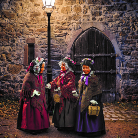
Just in time for the start of Carnival on Epiphany, Ingeborg Jaag’s figures will once again gather at the Franziskanermuseum. The exhibition, titled “Carnival Impressions,” will be on view starting January 6 at 11 a.m. in the Carnival section of the permanent exhibition. Six scenes depict events related to Carnival beyond the parades.
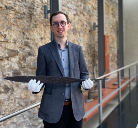
The early medieval “Langsax,” a single-edged sword from the second half of the 7th century, was discovered in 1943 during the construction of a water reservoir in Kirchdorf and recovered by Paul Revellio, then director of the Villingen Museum. It complements the display of Alemannic weapon finds and documents the dense settlement of the area around Villing in the Merovingian period, when the village near the “Old Town” (Altstadt), close to today’s cemetery, was founded. The Langsax was restored thanks to financial support from the state of Baden-Württemberg and is on display in the connecting corridor to the Celtic princely tomb at Magdalenenberg, in the “People, Work, Technology” section.
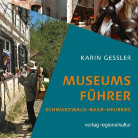
From the museum railway to the Carnival exhibition, from the Roman Museum to contemporary art—the exciting, colorful, and diverse museum scene in the Schwarzwald-Baar-Heuberg region has something for everyone: for history buffs as well as art lovers, for fans of folk culture as well as technology enthusiasts. And, of course, the Franziskaner Museum is also featured as one of the region’s 115 museums. Published by the districts of Rottweil, Schwarzwald-Baar, and Tuttlingen, the museum guide is available in the museum shop for 17.90 euros.
By the way: It pays to be quick during Advent. The first customer each day receives an Advent calendar gift. This promotion is supported by the partners at the Franziskaner Cultural Center, Wirtschaft und Tourismus Villingen-Schwenningen GmbH, the Office of Culture, and the Franziskaner Museum.